

Paramount War Set Guide: Full Card List, Chase Cards, Pull Rates, and Sealed Prices
Paramount War's full OP02 card list and numbering, estimated pull rates, the alternate-art leaders and the manga-art Ace that crowns the set, and the sealed market.
By Chase Society Desk
Paramount War is the One Piece set built on the story's most brutal chapter: the Marineford war, the arc that killed Ace and broke the age of Whitebeard. It landed as the second English set, right after the game's debut, and it carries the cast that fought that battle. Above all of them sits the manga-art Ace, one of the most coveted cards the game has printed.
Every card in OP02, priced live, is on the full Paramount War card list. Open that before you read on, because it settles any single-card question in a click.
Here we cover how OP02 is numbered, the cards that hold value, the rough odds of pulling them, and where the sealed boxes trade.
Paramount War at a Glance
- Release date: March 10, 2023, the second English set for the One Piece Card Game
- The base set runs OP02-001 to OP02-121, rising through Leader, Common, Uncommon, Rare, Super Rare, and Secret Rare
- Edward Newgate (Whitebeard) opens the numbering at OP02-001, with Monkey D. Garp right behind him
- Alternate-art "parallel" versions share the base card numbers, and they hold nearly all the value
- A Secret Rare Uta caps the run near the top at OP02-120
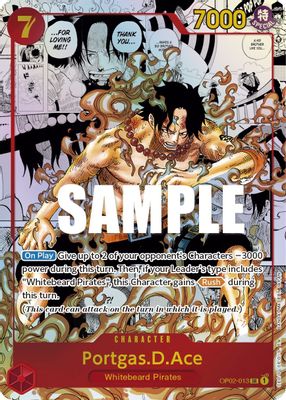
- The headline chase: the manga-art Portgas D. Ace, OP02-013
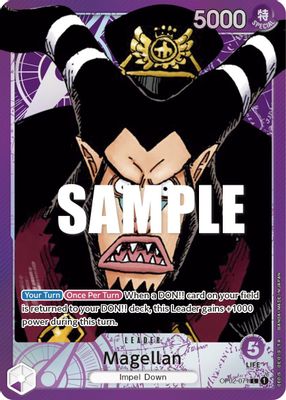
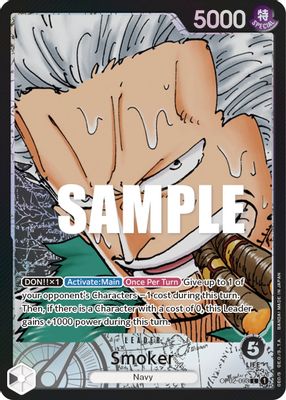
The set draws its roster straight from the war. Whitebeard, Garp, Ace, Smoker, Magellan, the admirals and the pirates who collided at Marineford all get cards here, and the ones drawn in the arc's most emotional moments are the ones collectors chase hardest. For the card list, that means the money lands on a specific slice of the parallels rather than spreading across the rarity sheet.
The Paramount War Card List: How It's Structured
One Piece numbers a set as one continuous run, and OP02 follows the pattern: OP02-001 through OP02-121, with rarity climbing as the numbers rise.
The base run, 001 to 121. Leaders open the set, then the characters, events, and stages that build a deck, sorted up through the Rares and Super Rares. The Secret Rares sit near the top, with the alternate-art Uta at OP02-120 among them.
The alternate-art parallels. This is the layer that writes the value table. A large share of the set was printed again in full-bleed alternate art, and every parallel keeps the number of its base card. A plain OP02-013 and the manga-art parallel that shares its number sit at opposite ends of the price sheet, so the number by itself never tells you what a card is.
Every card, base and parallel, is on the full interactive list with its current price.
Paramount War Chase Cards: What's Worth Money
The manga-art Ace, OP02-013 is the crown of the set, and it stands a long way clear of everything else. It renders Ace in Oda's own manga style rather than the game's usual painted look, and it lands on the character whose death is the whole point of the arc. The rarest treatment in OP02, on the card that carries the most weight in the story. That combination is why it leads by the distance it does.
Under it, the alternate-art leaders are the tier collectors actually fight over. A leader is the card a One Piece deck is built around and sits face-up all game, so its alt art is the piece a player most wants across the table. The Sanji, OP02-026 leads them, with the Garp, OP02-002 and the Whitebeard, OP02-001 close behind.
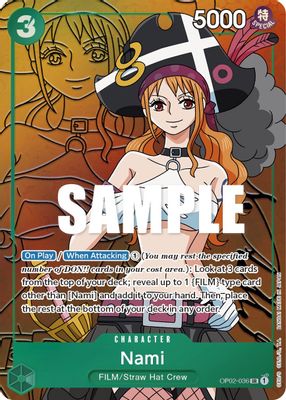
Below the leaders, the Straw Hat alt arts fill in the rest of the top board, the Luffy at OP02-062 and the Nami at OP02-036 among the names that hold most.
The rest of the chase board:
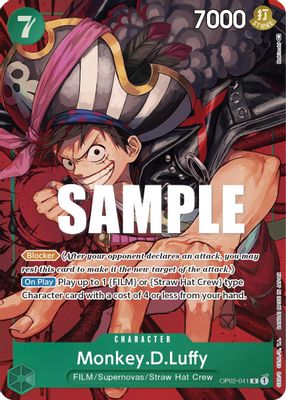
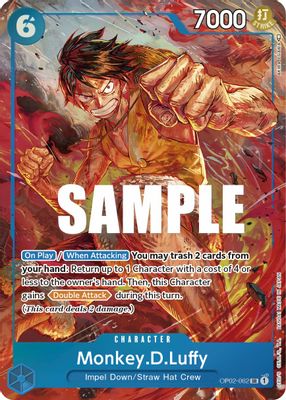
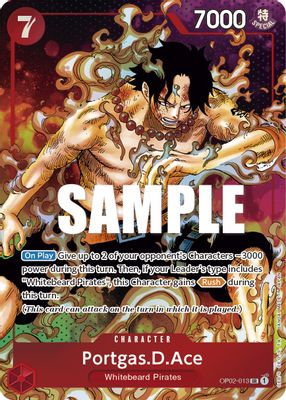
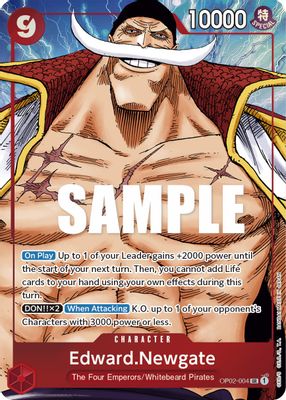
Paramount War's Alt-Art Leaders and the Manga Ace Carry the Set
One Piece does not build subset galleries the way other games do. The collecting hook in OP02 is the parallel layer, and inside it two things matter most: the alternate-art leaders and the single manga-style Ace above them.
The leaders draw their demand from the table. A player who runs a Whitebeard or Garp deck wants that character's best art staring down an opponent, and that pull is why the OP02 leader parallels command what they do. The manga Ace sits in a category of its own, valued less for play and more for what it is: a card that reaches straight back into the source material at the exact scene the whole set is about.
Buy singles out of Paramount War and you are buying parallels, and mostly leader parallels. The base cards under them are deck parts by comparison.
Paramount War Pull Rates (Estimated)
Bandai has never published odds for One Piece packs, so the rates below are pieced together from community box breaks and should be read as rough, not exact.
- A booster box holds 24 packs
- Leader: roughly 1 in every 2 packs
- Rare or better: one in every pack
- Super Rare: about 1 in 3 to 4 packs, several per box
- Secret Rare: about 1 per box
- Alternate-art parallel: about 1 to 2 per box, and this is the slot the chase cards come from
The manga Ace lives at the far, thin end of that last line, the scarcest print in the set. Pulling it now means opening boxes that have themselves become expensive to buy, which is most of why it leads OP02 by the margin it does.
Paramount War Sealed: Booster Box and Pack Prices
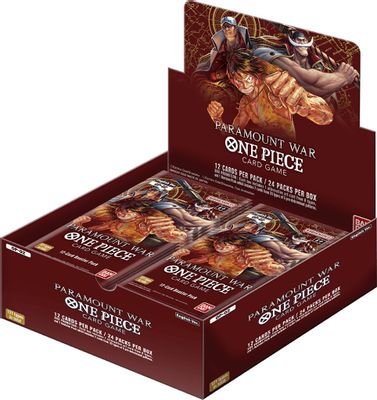
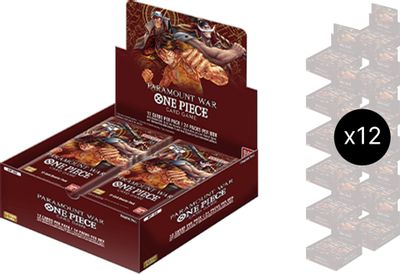
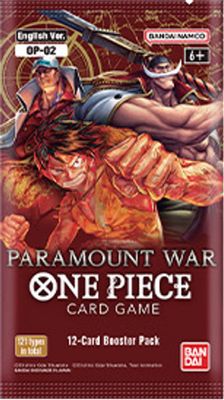
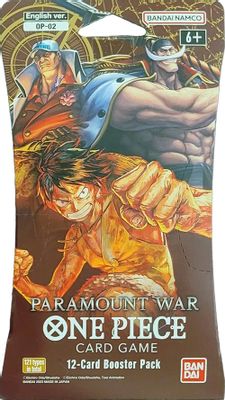
Paramount War came early in the English print run, before Bandai had caught up to how much demand the game would generate, so its sealed supply is thinner than the sets that followed. A sealed pack out of a closed set works like a lottery ticket on a fixed prize pool, and its price tracks what can come out of it. As the manga Ace and the leader parallels climbed, loose OP02 packs and boxes climbed with them, which is how a second-set box ended up among the pricier sealed in the game.
The case sits at the top of that logic. A booster box is 24 packs, and a factory case bundles several of them into one product a collector will almost never break, so it trades at the steepest end of the board.
Why Paramount War Endures
Paramount War would matter even if none of it had gotten expensive.
Marineford is the arc a lot of readers point to as the moment One Piece became something larger, the war where the Whitebeard Pirates stormed a Marine stronghold to save Ace and lost him anyway. Bandai handed that arc the game's second set and let the cards carry its cast, from Whitebeard at the front of the numbering to the manga-style Ace at the top of the value table. The card and the story line up the way the best chases always do.
The set sits early in the One Piece run, right after Romance Dawn and ahead of Pillars of Strength and Kingdoms of Intrigue. We wrote about the arc's grip on the game in One Piece: War Is Here. Second set, first great tragedy, and the Ace that keeps drawing collectors back to the war that made the story.
The Daily Chase
Get the next one in your inbox.
Daily TCG market intelligence. Read in five minutes. Free.
Keep reading