

Fusion Strike Set Guide: Full Card List, Chase Cards, Pull Rates, and Sealed Prices
Fusion Strike's full 284-card list structure, estimated pull rates, live chase card prices led by the Gengar VMAX alternate art, and the sealed market board.
By Chase Society Desk
Fusion Strike gave the Sword & Shield era its third battle style and, in the Gengar VMAX alternate art, one of the era's most chased secret rares. It's also one of the largest English expansions the game has ever printed, with Mew as its centerpiece. It's long out of print, and the market prices it like product that won't be reprinted.
The full Fusion Strike card list lives on our set page: all 284 cards, prices updating live. That's the page to bookmark, and it's what most readers come here for.
What follows is everything around that list: how the 284 cards are organized, which ones hold the money, the rough odds of pulling them, and how the sealed boxes are trading for anyone who'd rather collect product than singles.
Fusion Strike at a Glance
- Release date: November 12, 2021, late in the Sword & Shield (SWSH) era
- 264 cards in the main numbering, 284 total
- 20 secret rares, numbered 265/264 through 284/264
- One of the largest English expansions the game has ever printed
- 4 alternate-art VMAX secret rares and 5 alternate-art Pokemon V, the slate collectors chase hardest
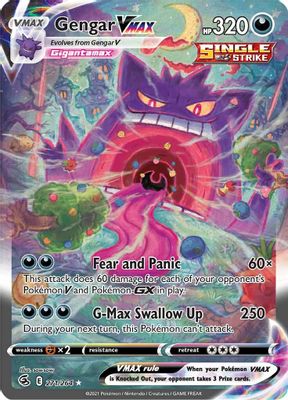
- The headline chase: Gengar VMAX #271, the alternate full art
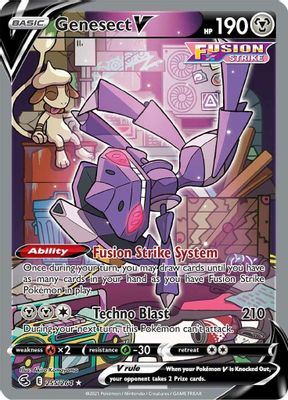
This is the set that introduced the Fusion Strike battle style, the third and last of the SWSH-era styles after Single Strike and Rapid Strike. The Mew VMAX deck it seeded, paired with Genesect V, went on to anchor competitive tables for a long stretch. That matters for the card list: a handful of the set's V cards and trainers saw more tournament play than most of its secret rares ever will.
The Fusion Strike Card List: How It's Structured
The 284 cards break into two blocks, and the split is simple.
The main set, 001 to 264. Commons, uncommons, holo rares, the Pokemon V and VMAX, and the full arts. The stretch from 245 to 264 is where the alternate-art and full-art V cards sit, the Mew V and Celebi V alt arts among them. This is one of the longest main runs the game has printed, so the base rarities go deep before you reach the painted cards.
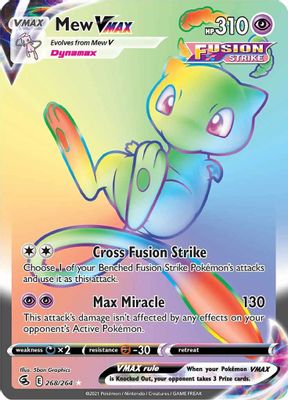
The secret rares, 265 to 284. Twenty cards numbered above the set total: the alternate-art VMAX, the rainbow rares, and the gold secrets. The four alternate-art VMAX live up here, led by Gengar #271 and Espeon #270.
You'll find both blocks, card by card with live prices, on the full interactive list.
Fusion Strike Chase Cards: What's Worth Money
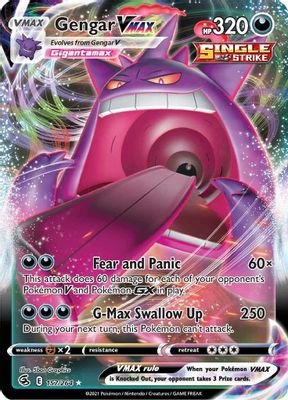
Gengar VMAX (Alternate Art Secret), #271 is the card the set is built around. Nothing else in Fusion Strike comes close, and it lands on most shortlists of the best alternate arts the Sword & Shield era ever printed. A purple ghost pouring out of the frame tends to do that.
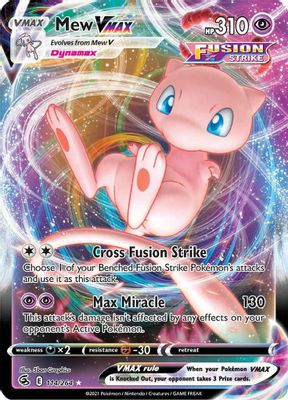
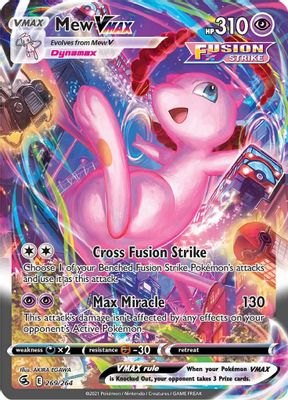
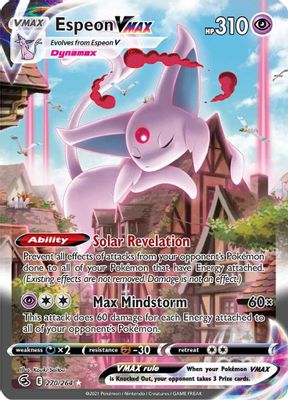
The Eeveelution and Mew alt arts fill in behind it. Espeon VMAX, #270 holds second, and Mew VMAX, #269 third, the same Mew that gives the set its centerpiece and its best deck.
Below the secrets, the alternate-art V cards lead the next tier. Mew V, #251 and Celebi V, #245 are the ones to know, both painted in the soft-scene style the era did so well.
The rest of the chase board:
Fusion Strike's Alternate-Art Secrets Carry the Set
Fusion Strike never got a Trainer Gallery. The galleries that defined the late SWSH sets started one set later, so here the collecting hook is the alternate-art secret slate instead.
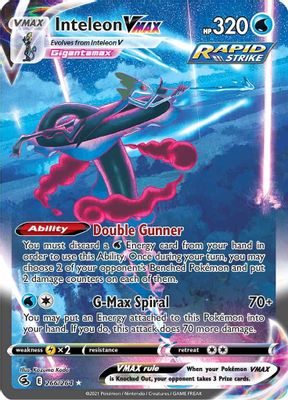
There are four alternate-art VMAX: Gengar, Espeon, Mew, and Inteleon. They are the cards the set is remembered for, and they own the top of the value table by a wide margin over the rainbow and gold secrets sitting in the same numbering. Gengar is the runaway. The Eeveelution premium keeps Espeon close behind, and Mew earns its place as the face of the set.
Chase singles in this set and you keep landing on those four. That's where the buyers stack up and where the floor holds best.
Fusion Strike Pull Rates (Estimated)
Pokemon never published pack odds for the SWSH era, so the rates below come from large community pull samples. Read them as ballpark, not gospel.
- Reverse holo: one in every pack, guaranteed
- A Pokemon V: about 1 in 5 packs, so roughly seven per booster box
- Secret rare: about 1 in 49 packs, a little under one per box
- Rainbow rare: about 1 in 78 packs, around one every two boxes
- Gold secret: about 1 in 131 packs, closer to one every three to four boxes
Those four alternate-art VMAX share that secret-rare slot with sixteen other cards, so any single one is already a long shot. Pulling the Gengar in particular takes serious box volume, and that thin supply is most of why it sells for what it does after all the packs this set has been through.
Fusion Strike Sealed: ETB and Booster Box Prices
The sealed board:
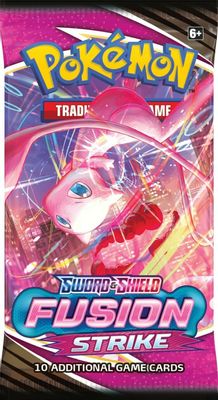
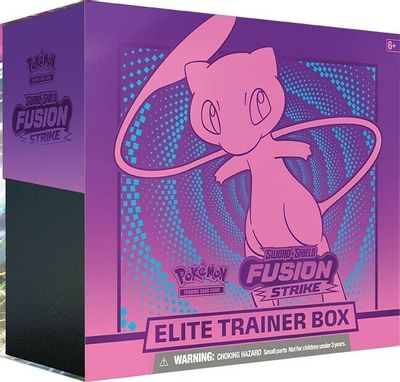
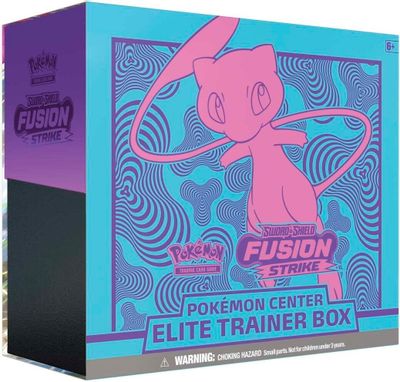
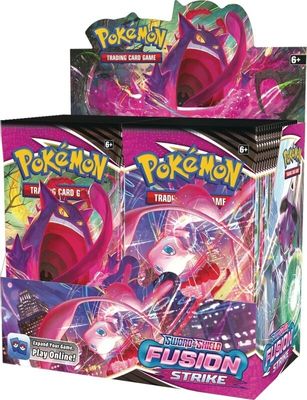
The Elite Trainer Box (ETB) changes hands more than any other sealed unit here, which makes its row the quickest gauge of how much demand the set still pulls. We follow the wider out-of-print SWSH board in Sword & Shield Is Alive.
One pattern is worth keeping in mind on any retired set. A booster box holds 36 packs, and a pack sealed inside an intact box tends to cost more than the same pack sold loose. Collectors pay up to keep a box whole. When that spread widens, buyers are betting harder on scarcity.
Why Fusion Strike Endures
Even if none of these cards were worth a cent, Fusion Strike would earn its place on the shelf.
Mew is the heart of it. The Fusion Strike battle style is built on the idea of combining energy and Pokemon, and Mew, the mythical that can copy any move, is the natural face for it. The set puts Mew on a V, a VMAX, full arts, and an alternate art, then lets the Mew VMAX deck carry that identity onto competitive tables. Theme and cards pull in the same direction.
And the Gengar VMAX is the cooler object. Gengar has been a fan favorite since the first generation, the grinning ghost everyone has a story about, and its alternate art here is one of the most striking the era produced. Put it next to the Espeon alt art and you have two of the binder pages people actually frame.
Fusion Strike sits in the back third of the Sword & Shield era, between Evolving Skies and Brilliant Stars, with Lost Origin still to come. Out of print, enormous, and anchored by a Gengar the market never stopped wanting. Years from now it'll still be the alt art collectors pull up first when they argue the best of the era.
The Daily Chase
Get the next one in your inbox.
Daily TCG market intelligence. Read in five minutes. Free.
Keep reading